Tour and Travel

Nature

Innovation

Family Health

Find out the most enjoyable moments with precious Life care and Health

Celebrity Gossip

Showing posts with label Israel. Show all posts

Monday, 9 July 2012

0 Wealthy Minority revenue Equals Majority Poor Loss

I can hire one half of the working class to kill the other half.
 Jay Gould

Keep you doped with religion and sex and TV
A working class hero is something to be…
John Lennon

The robber baron and the rock and roll poet expressed sentiments about the same social reality from radically different perspectives. Profit and Loss capitalism has enabled many recipients of crumbs from the banquet tables of the rich to enjoy the applied label of middle class given them by consciousness controllers in politics and media. But present realities find the religion, sex, tv and other consumer products less available to cloud minds and fill bodies under the delusion of equality and the cruel reality spoken of by the robber baron. That reality needs to be confronted by a united class and no longer tolerated by a divided humanity, now more so than ever.

Wealthy Minority revenue Equals Majority Poor Loss

As the global crisis causes national book juggling on a daily basis to maintain order, and that of international banking on a near hourly schedule,  it becomes more apparent that the algorithmic accountants for the rich are operating to the detriment of most members of the race. Problems supposedly at the root of a crumbling financial structure are seen by minority profiteers as government’s profligate spending on people ,  terrifying foreign threats that call for expanded wars , and other lies perpetuated by mind managers to cover the gross injustice that is reducing more of humanity to debt servitude and abject poverty while the planet itself is threatened in all its life support systems . This happens as shrinking segments of the population increase their enormous wealth at phenomenal speed, destroying more of the social and natural environment as they do so and patting themselves on the back for being such masterful and benign dominators of life.

Creatures of no observable skills or special talents amass billions of dollars and perform no useful work at all but actually bring about cultural and ecological devastation for which they are rewarded with more tax payer dollars. Economists too dumb to see the crisis predicted by many critics still wisely advise with ancient notions of a free market religion, supply and demand curves, and the “creative destruction” which  does away with what they find useless - jobs for working people – and produces more profits for what they find divine – capitalists. These servants of a religious philosophy masked as secular finance call for total assault on the public sector  in a form of national masturbation; by focused obsession on the economy’s private parts. The loss of jobs bring lower employment costs for the ruling minority and higher social costs to the working majority who still have some form of incomes and pay taxes to keep rulers rich and not allow poor people to drop dead in the streets. As they expend more for weapons, consumer goods and security products to protect themselves from the alienated who are alleged to threaten them from below , they are distracted from noticing the tiny group laughing at them from above while it dumps garbage on their heads.

This does not describe 19th century reality but the present condition of a 21st century rushing backward for most while the minority at the top lavishes wealth on itself by robbing humanity’s future. A  fast growing universal demand for democracy is slowly changing things despite interference and misguidance from rulers and their hired help, though it must speed up if we are  to have a long range future. Some among the many reasons why:

The incredible arrogance of western powers, especially the U.S. and Israel, insisting that Iran suspend activities – none of which exist - to create nuclear weapons – none of which it has – while the USA, the only nation to slaughter thousands with nuclear weapons, and Israel , armed with hundreds of nukes which they demand remain unmentioned in a global holocaust of silence, and Iran, not Israel, calls for a nuclear free middle east. Whether dubbed  colossal chutzpah, testiculo grandioso or massive balls, this combination of breathtaking gall with microscopic brains endangers most of the world, beginning with Iran and the middle east.

The same imperial master race/chosen people syndicate calls a conference on the future of Syria, but neither Syria nor neighbor Iran are allowed to participate in the discussion. Does that imply elephant testicles? Dinosaur balls? Gigantic gonads? Is there any fitting trash talk to cover this kind of pinhead, pea brained dementia?

Possibly so, but what can we call the urge for what is named austerity, meaning cuts in programs for the most helpless in society so that the most wealthy can make more money and possibly, hopefully, prayerfully , or when the drugs kick in, then invest in creating jobs for them? That’s if the economic witch doctors, mullahs, priests and rabbis don’t decide that creative destruction would be better, thank you. How do you make fun of this in a way that can drown out the cries of those who suffer while this madness continues? Whether they are in pain from hunger, loneliness, despair at the bombs falling on their heads, or the countless other  horrors that billions suffer while millions are confused into incurring more debt and paying for war while thousands smile as their servants deposit more millions in the bank for them. And that’s not all, for the moment.

Weather irregularities ranging from heat waves to cold snaps to drenching rains and foul air are written off as typical acts of nature having nothing to do with what most of science has called climate change. While this pop title may be a trivialization of the issue, most responsible investigators from what is called the scientific community – a branch of material religious faith generally more reliable than snake dancing and prayer - are treating this as a serious threat to the future of the human race, while profiteers seek ways to make money by transforming old garbage into new sewage and calling it a green revolution. Not to worry folks, private profits will take care of everything. They will entail, of course and as always , much greater losses in order to create those profits, but as long as our rulers can languish in luxury they may leisurely invest in something that will eventually bring us jobs. Like maybe another war.

Prevailing wisdom seems an oxymoron as it applies to ruling power, its politicians and its media. But expanding electronic methods of selling more consumer waste have also created a contradictory method of communication that the imperial regime is trying desperately to control, but at only limited success. Past populations could be kept murdering one another and drugged by religion, sex and tv when they weren’t directly doing so, but present distractions are too numerous and fast to be totally controlled by any authority. It is trying, desperately and with bloody efficiency, as it murders with robots , entraps with technology and relies on its smaller but more faithful captive class of professional indentured servants. But the tendency of more humans to say “enough” seems apparent.

The  escapist ploys still available by which to keep workers killing themselves when not being captivated by media or entrapped by newer versions of religion, sex and tv are more prevalent than ever. They can go anywhere and dull minds 24 hours a day, but they are not only suitable to listen to or watch; they can also enable people to broadcast their own messages, and while most of those can seem all too personal, the tribe of humanity is using them socially and coming closer together as the problems get worse. That growing togetherness offers hope for ultimate democratic action to take control of a social environment that demands real transformation of the race and its possibilities. Working class members of the human majority don’t all need to be individual heroes but they could take social inspiration from these closing quotes. Stay  tuned.

 “The whole idea of compassion is based on a keen awareness of the interdependence of all these living beings, which are all part of one another and all involved in one another.”
-Thomas Merton

An individual has not started living until he or she can rise above the narrow confines of his or her individualistic concerns to the broader concerns of all humanity.”
-Martin Luther King, Jr.


Thanks:http://www.aljazeerah.info/Opinion%20Editorials/2012/July/9%20o/Wealthy%20Minority%20Profit%20Equals%20Majority%20Poor%20Loss%20By%20Frank%20Scott.htm

Thursday, 21 June 2012

0 Hamas declare cease-fire with Israel

The Palestinian group Hamas says its military wing has agreed to an Egyptian-brokered cease-fire with Israel following a sharp increase in violence between the two sides.

In a statement posted early Wednesday, Hamas -- which controls the Palestinian territory of Gaza -- says it will observe the cease-fire as long as Israel remains committed to the agreement.

Hamas declare cease-fire with Israel

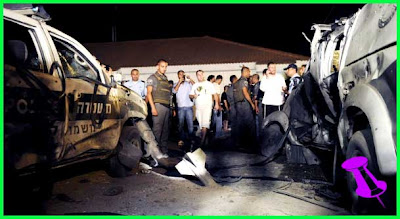
There was no immediate response to the cease-fire announcement from Israel, which said more than 75 rockets had been fired into its territory from Gaza in the past three days. Six Palestinians and one Israeli died between Sunday and Tuesday in a spate of rocket attacks and Israeli airstrikes, officials on both sides reported; Israel also said a Palestinian child was killed when a rocket launch attempt by militants backfired.

Israeli warplanes struck two targets in Gaza on Tuesday in response to the rocket fire, the Israel Defense Forces said. Hamas security sources told CNN the strikes targeted a site used to train Palestinian militants to launch rockets and another training facility run by the Izzedine al-Qassam Brigades, the military arm of Hamas, with two people injured.

"We stress that our confrontation with the Zionist enemy in this round was in its minimum in fire and counterattacks," the brigades said in a statement announcing the deal. It said the agreement includes "all other resistance factions" operating from Gaza, which has been under Hamas control since 2007.

Israel says nearly 300 rockets have been fired into its territory from Gaza since the beginning of 2012.

Thanks: http://edition.cnn.com/2012/06/20/world

Monday, 4 June 2012

0 Germany sells Israel Nuclear-equipped submarines

Der Spiegel has just published an important article about the Dolphin submarines Germany has been selling to Israel over the past fifteen years.  Israel now has three, with a fouth and fifth on the way and sixth in the pipeline by 2017.  Sale of up to nine submarines is contemplated by both sides.  The ostensibly big news in this story is that both the Israelis and Germans knew the subs were nuclear weapons-capable, but the Germans had denied it.  In fact, they contain a special secret hydraulic launching system designed for nuclear cruise missiles.

Germany sells Israel Nuclear-equipped submarines

But this isn’t the real news since any reasonably intelligent person would know that any submarine Israel would buy would carry nuclear weapons.  There are two truly newsworthy aspects of this story: one reported and the other not.  The reported one is that German chancellor Angela Merkel officially denied the subs would carry nukes all the while knowing they would.  That is a big story, no doubt, in Germany.  In Israel it’s pretty much a yawn, given that Israelis are used to their leaders lying through their teeth on national security and military matters.

But what has not been reported and is probably the most important aspect of this story is the major upheaval it will introduce in the Middle East balance of power.  Der Spiegel notes that the nukes on board the Dolphins will offer Israel a “second strike” capacity against any enemy who thinks to level a crippling pre-emptive blow against it.  Ostensibly, this will make a power like Iran, after it would get nuclear weapons (if it would), think twice about using the nukes since Israel’s cruise missiles will level entire Iranian cities.

But the question must be asked: who in the Middle East has the power to mount such an attack against Israel?  No one.  Iran doesn’t even have nukes and certainly can’t attack Israel without them.  There simply is no other country that could do so.  Perhaps in one’s wildest dreams one could imagine Israel and Turkey tussling with the Turks thinking of striking a crippling blow against Israel.  But essentially, no one in the Middle East could mount a first strike.  So in effect Israel is getting a weapon for a purpose that doesn’t exist.  Why should it need second strike capacity when there is no first strike possible?  It’s a little like running for president even before you’ve been elected to the school board.

From this flows an even more important development.  I recently posted about a conversation I had with noted Israeli nuclear weapons analyst Avner Cohen about the hidden impact of Israel’s nuclear arsenal on strategic military and policy matters that one would never think could be influenced by nuclear weapons.  Namely, that a nuclear-weapons-enabled Israel has no reason to compromise either with its neighbors or with its allies on any major issues like ending Occupation, returning to 1967 borders, etc.  Just as North Korea’s nukes have enabled it to maintain a surprisingly belligerent posture towards its enemies and even its Chinese friends, Israel too can thumb its nose at anyone asking it to make concessions it isn’t prepared to make.

An Israel with nukes can even tell a U.S. president that he can take his settlement freeze and shove it.  That’s precisely what Bibi Netanyahu did and Pres. Obama didn’t have the guts to pursue the matter.  After all, what leverage did Obama have unless he was willing to go to the mat and invest everything in winning?

There is another macabre irony in Germany’s sale of these weapons to Israel.  The state which inflicted the Holocaust on the Jewish people and incinerated 6 million of them in the ovens of Poland, has now dealt Israel the ability to incinerate any Arab country so bold as to stand in the way of Israeli hegemony over its little slice of the Middle East.  If an Israeli missile is ever fired at an Arab state and inflicts major damage upon it, this will be one of the first things the media will mention.  And Germany will then, too late, have some soul-searching to do about giving Israel the power to inflict its own Holocaust on the Mideast.

Ah yes, the right-wing naysayers will protest at references to an Israeli-inflicted Holocaust because it can’t and won’t happen here (or I should say, there).  Israel would never deliberately kill more than say the ten or fifteen thousand Arabs its killed since 1948.  It would never kill, say a hundred thousand or a million.  Unfortunately, history has offered up the American example of two atom bombs used against Japan within a week.  Though no one has used a nuclear weapon since, we let the bomb out of Pandora’s Box and Israel would clearly be willing to use it if it had to.  Can anyone say that they’d trust Israel’s judgment in using such a weapon as an absolute last resort to stave off national catastrophe?

Germany has offered the subs to Israel on terms that what can only be called a sweetheart deal: the seller finances one-third of the purchase price ($168-million), but Israel doesn’t make its first payment till 2015.  Is Germany that desperate for customers that it had to practically pay the Israelis to buy weapons that can incinerate half the Middle East?

It seems to me that right about this time some German moral thinkers (aside from Gunter Grass, whose criticism of the sub deal was right on the mark) and peace activists should be doing some very deep soul-searching about why their country has offered a weapon of such enormous power to a country which has done nothing but resist making peace in the region over the past 45 years or more.

It’s worthwhile noting Ehud Barak’s hearty congratulations offered to the German people:

Israeli Defence Minister Ehud Barak told SPIEGEL that Germans should be “proud” that they have secured the existence of the state of Israel “for many years.”

These weapons have done much more than secure Israel’s existence.  They’ve secured Israel’s ongoing intransigence in any matters pertaining to peace negotiations.  This in turn makes the Middle East a much more unstable place, which doesn’t render Israel more secure, but rather less.

Thanks:muslimvillage.com/2012/06/05/23902

0 Obama performing politics with Iranian cyber-war: McCain

U.S. senator John McCain accused Barack Obama's administration of leaking the report of Obama's approval of cyber-attacks against Iran in a bid for pre-election glory.

Obama performing politics with Iranian cyber-war

The New York Times reported on Friday that cyber-attacks employing a malicious computer code developed with Israel were part of a U.S. plan against Iran code-named Olympic Games. The report added that the operation was approved during the rule of Obama's predecessor and was later accelerated by the current president.

AFP reports that McCain spoke to reporters in Singapore, where he was attending a conference on Asian security, saying: "Again we see these leaks to the media about ongoing operations, which is incredibly disturbing. Doesn't this give some benefit to our adversaries?"

McCain also pointed to previous leaks that revealed details of last year's U.S. raid that led to the killing of Al-Qaeda leader Osama Bin Laden.

McCain, who is the most senior Republican on the Senate Armed Services Committee, said: "We know the leaks have to come from the administration. And so we're at the point where perhaps we need an investigation. So this is kind of a pattern in order to hype the national security credentials of the president, and every administration does it. But I think this administration has taken it to a new level."

McCain allowed that the president has the authority to carry out such operations but he said most presidents would discuss them with a "select few leaders of Congress."

McCain said the White House did not brief U.S. lawmakers about the cyber-attacks.

The New York Times report was based on interviews with current and former U.S., European and Israeli officials and was adapted from David Sanger's book, which will be published next week, titled: "Confront and Conceal: Obama's Secret Wars and Surprising Use of American Power."

The launch of Iran's first nuclear power plant at Bushehr was delayed in 2010 by the Stuxnet virus, and most recently, the Russian-based Kaspersky Lab discovered the virus "Flame", which reportedly has been wreaking havoc in Iranian computer systems.

Thanks:payvand.com/news/12/jun

Sunday, 3 June 2012

0 Iran's Khamenei admonish Israel of 'lightning' reply

Iran's Supreme Leader warned Sunday that any Israeli attack would be answered with a "lightning" response by the Islamic Republic and suggested Iran's nuclear program cannot be curtailed by Western sanctions.

The remarks by Ayatollah Ali Khamenei echoed previous hard-line positions by Iran, but take on added resonance amid talks with the United States and five other world powers. Western leaders hope for a diplomatic accord that would ease concerns about Iran's nuclear ambitions, while Israeli officials say they leave all options open to try to derail Iran's uranium enrichment.

Iran's Khamenei

The West fears Iran could one day produce weapons-grade material. Khamenei called the claims of a secret weapons program lies and repeated Iran's statements that it only seeks reactors for energy and medical research.

Khamenei put Israel on notice that any military action would bring swift consequences.

"Should they take any wrong step, any inappropriate move, it will fall on their heads like lightning," he warned in a speech marking the 23rd anniversary of the death of his predecessor, Ayatollah Ruhollah Khomeini, the leader of the 1979 Islamic Revolution.

U.S. Secretary of State Hillary Rodham Clinton said she's not drawing any conclusions about the latest harsh words from Iran or how they might affect upcoming nuclear talks in Moscow.(Google)

Clinton says leaders often say things for domestic purposes, and she hopes Iran will work toward a diplomatic solution.

Thanks: sfgate.com/cgi-bin/article.cgi?f=/c/a/2012/06/03/MNB51OS6N2.DTL

Wednesday, 30 May 2012

0 Israel may decide Middle East crisis unilaterally

Israel may take up "unilateral actions" if the Palestinian-Israeli peace talks do not move ahead, Israeli Defence Minister Ehud Barak said.

This comment prompted speculation that Israel may unilaterally withdraw from the West Bank like it did in 2005 in Gaza Strip.

Israel may decide Middle East crisis unilaterally

Barak said that if the Palestinian-Israeli talks "prove to be impossible, we have to consider a provisional arrangement or even unilateral action".

He, however did not specify which "unilateral actions" he meant.

In 2005, Israel unilaterally withdrew from the Gaza Strip, evacuating 8,500 settlers and thousands of soldiers from the occupied territory.

The talks stalled in September 2010 over disagreements on Israeli settlement construction in the West Bank. Palestinians said they would not resume negotiations unless the construction stopped.

The Palestinians are seeking to create an independent state on the territories of the West Bank, East Jerusalem, partially occupied by Israel, and the Hamas-controlled Gaza Strip and want Israel to pull out from the Palestinian territories occupied after the 1967 war.

Israel may resolve Middle East crisis unilaterally

Israel, however, has refused to return to the 1967 borders and is unwilling to raise the issue of Jerusalem, which it says is the indivisible capital of the Jewish state.

Thanks:zeenews.india.com/news/world

Sunday, 27 May 2012

0 Israel Is nervously Watching Egyptian Vote

Both candidates for Egypt's presidency have pledged to respect the country's peace treaty with Israel, but they differ greatly in their approach, especially regarding the Palestinians.

In addition to preserving the peace with Israel, Ahmed Shafik, a former Egyptian Air Force general, is expected to continue Egypt's patronage of the mainstream Palestinian faction Fatah. Fatah, which leads the Palestinian Authority, cooperates with Israel.

Egyptian Vote

Mr. Shafik's military background and his role as the last prime minister to have served under the ousted president, Hosni Mubarak, suggest that he would approach Hamas, the Islamist faction that controls Gaza, with suspicion and hostility. Mr. Mubarak was one of Israel's staunchest allies.

Mohamed Morsi, the candidate of the Muslim Brotherhood and former leader of its parliamentary bloc, has a long history of hostile statements about Israel's treatment of the Palestinians. He has called Israel's citizens "vampires" and "Draculas."

Mr. Morsi has also criticized the Fatah leader Mahmoud Abbas for what he called gullible collaboration with Israel in the absence of a Palestinian state, and he has praised Hamas -- an Islamist offshoot of the Brotherhood -- for resisting the Israeli occupation.

"For Hamas, it means the final outcome of this election will be the difference between winning Egypt and more of the same," said Gamal Abdel Gawad, director of the Ahram Center in Cairo.

Brotherhood leaders have said they intend to use their influence with both Fatah and Hamas to urge them to compromise with each other to press Israel to recognize a Palestinian state.

"The Brotherhood will gently pressure Hamas to be more pragmatic, although that is a direction that Hamas is already moving," said Shadi Hamid of the Brookings Doha Center.

Hamas officials have acknowledged that they are looking more to Egypt and the Brotherhood for support as they move away from Syria. A top Hamas official, Mousa Mohammed Abu Marzook, settled in Cairo after fleeing the unrest in Syria and maintains close ties with the Brotherhood. He could not be reached for comment on Friday, but the recording on his spokesman's cellphone was set to the theme song of the Brotherhood's Freedom and Justice Party.

Egypt awaits the writing of a new constitution that will define the powers of the president, but the office is expected to oversee foreign policy, possibly in consultation with military leaders.

Thus, gaining the presidency would pose challenges to Mr. Morsi and the Brotherhood. If, as promised, the Brotherhood maintains the peace with Israel, Mr. Morsi as president could be expected to meet with Israeli's ambassador and top officials, which for the Brotherhood would mark a new level of official recognition of the Israeli state. "I assume he would have to," Mr. Hamid said, "and that would be a landmark moment."

The Israeli government, though alarmed at the prospect of a less-friendly Egypt, has maintained a wary silence about the elections, fearing any perceived interference could backfire.

But Israeli analysts and experts view Mr. Shafik as a moderate who can probably be counted on to keep his promise to preserve Egypt's 33-year-old peace treaty with Israel, long a cornerstone of regional stability. Mr. Morsi, who has also pledged to respect the treaty, is described by some as a potentially dangerous unknown who might be tempted to act more out of religious ideology.

Many Israeli analysts say they are grappling less with the question of who the president will be and more with the question of what direction he, and Egypt, will take.

"The balance between the presidency, the government, the Parliament, the army and public opinion will determine the future of Egypt and its relations with its neighbors, including Israel," said an Israeli government official, speaking on the condition of anonymity because of the nature of the subject.

Thanks:post-gazette.com/stories/news/world

Thursday, 24 May 2012

0 Israel steps up protection ties with China

After a prolonged chill, security ties between Israel and China are warming up.

With Israel offering much-needed technical expertise and China representing a huge new market and influential voice in the international debate over Iran's nuclear program, the two nations have stepped up military cooperation as they patch up a rift caused by a pair of failed arms deals scuttled by the U.S.(Bing)

Israel steps up protection ties with China

The improved ties have been highlighted by this week's visit to Beijing by Israel's military chief and a training mission to Israel by the Chinese paramilitary force that, among other things, polices the restive Tibetan and Muslim Uighur regions. Prime Minister Benjamin Netanyahu is expected to travel to China in the coming weeks.

After their meeting Monday, both China's chief of staff, Gen. Chen Bingde, and his Israeli counterpart, Lt. Gen. Benny Gantz, hailed the growing ties and held out the possibility of even closer military cooperation.

Chen told the official China Daily that China "attaches importance to the ties with the Israeli military and is willing to make concerted efforts with the Israeli side to deepen pragmatic cooperation."

In a statement released by the Israeli military, Gantz mentioned a commitment to developing the relationship, including "joint courses that are scheduled to take place." It did not elaborate.

Such comments are a remarkable turnaround from just a few years ago, when ties deteriorated after the failed arms deals.

Israel and China established diplomatic relations in 1992, and the two countries traded military technology for nearly a decade. Some military analysts believe that Israel helped China develop its J-10 fighter plane during the 1990s, a claim that both countries have denied.(Google)

These ties suffered a blow in 2000 when the U.S. pressured Israel to cancel the sale of a sophisticated radar system to China, fearing it could alter the balance of power with Taiwan. The cancellation infuriated China, cost Israel hundreds of millions of dollars, and frayed ties.

Then, in 2005, the U.S. persuaded Israel not to service spare parts for unmanned aircraft drones already sold to China, concerned that it would upgrade China's airborne anti-radar capability. Israel officials say that Israel has since halted weapons sales to China.

But in recent months, relations have begun to improve. In June 2011, Israeli Defense Minister Ehud Barak traveled to China. Chen, the Chinese military chief, visited Israel in August, and in December, Israel's paramilitary Border Police unit hosted a delegation from the People's Armed Police.

During the monthlong course, "cadets were taught a variety of information, with an emphasis on fighting terror, dealing with disturbances, self defense, open field combat and more," according to an Israeli police statement. It was the first such exercise, police said.

This newfound cooperation has raised concerns among human rights advocates. Israel's Border Police serve on the front lines of anti-Israel demonstrations in the West Bank and have been accused of using excessive force dispersing crowds. It denies the allegations.

The People's Armed Police, or PAP, has also been accused of using excessive force, particularly in Tibet, a western region where the indigenous Buddhist population has pushed for independence.

Policing Tibet is a small part of a challenging mission. Believed to have as many as 1 million members, the PAP is responsible for asserting government control over a rapidly changing society beset by soaring numbers of protests, strikes and ethnic unrest by Tibetans and Muslim Uighurs on China's Central Asian frontier.

Set up in the early 1980s to take over domestic security from the armed forces, the PAP has been derided for much of its history as undisciplined. The units proved unfit to handle the Tiananmen Square democracy demonstrations in 1989, forcing the Communist Party to call in the People's Liberation Army.

In the past decade, the government has launched a full-force upgrade.

It now has rapid-response, counterterrorism, anti-hijacking and other specialized units.(Aol)

Nicholas Bequelin, a China researcher at Human Rights Watch, said PAP units engaged in "widespread abuses" in putting down a mass Tibetan uprising in 2008, using live ammunition against unarmed protesters, disappearances and other acts of disproportionate brutality.

He said the Israeli training "must include a human rights component, such as the principle of proportionate use of force."

Israeli officials rejected any notion of wrongdoing, saying that all cooperation was "transparent" and done with the full knowledge of the U.S. The officials spoke on condition of anonymity because they were discussing a sensitive diplomatic issue.

The Chinese Embassy in Tel Aviv did not respond to a request for comment.

According to Israeli diplomats and analysts, the interests on both sides are clear. Israel has a strong interest in getting closer to a rising world power, while China is interested in Israeli military and technological know-how.

"I'm sure Israel does whatever it can to let the Chinese know that despite limitations on military transfers, Israel still has a strong will to attain good relations," said Yoram Evron, a China expert at Haifa University and the Institute for National Security Studies, a Tel Aviv think tank.

He said he believes the warming ties were initiated by the Chinese, who were caught off guard by the Arab Spring protests convulsing the region in the past year and a half.

"Due to the Arab Spring, China may have the impression, a stronger impression than before, that Israel is relatively stable compared with other players in the region," he said.

An Israeli diplomat involved in Asian affairs said the security ties are part of a larger blossoming of relations. China is now Israel's third-largest trade partner, after the European Union and United States. Bilateral trade exceeded $8 billion last year, roughly 20 percent higher than the previous year.(Yahoo)

While those figures are minuscule for China, the diplomat noted that China is very interested in some key industries in which Israel has expertise. He cited Israeli water technologies in agriculture, desalination and wastewater management.

He said Israel has signed number of trade agreements with China in recent years, including a new scholarship program to bring 250 Chinese university students to Israel annually. It also has expanded its diplomatic presence in China with a new consulate in the city of Guangzhou, and another one set to open in Chengdu next year.

Israeli officials acknowledged their motives go beyond trade. They said they routinely raise concerns about Iran's nuclear program with China, which is both a permanent member of the U.N. Security Council and which relies on Iran for roughly 10 percent of its oil supply.

Israel, like the West, believes Iran is trying to build a nuclear bomb, and has hinted it will attack Iran if it concludes that international diplomatic efforts to stop Iran have failed. An Israeli attack could disrupt the flow of oil and send global energy prices skyrocketing, a nightmare scenario for China.

So far, the Israeli lobbying has yielded mixed results. China has helped pass four sets of economic sanctions against Iran, but has tried to dilute the language.

"We would like to see them taking more concrete steps because they have clout over Iran," the diplomat said. "We explain that if the issue is not resolved, it might affect stability in the Middle East."

Thanks:thejakartapost.com/news/2012/05/25

Tuesday, 22 May 2012

0 U.S. Tattered between Israel’s Nuclear Demands Versus Iran’s

U.S. negotiators going into Iranian nuclear talks today are under pressure to reconcile two fundamental and seemingly irreconcilable demands before the clock runs out on a diplomatic solution.

Iranian leaders want the international community to accept that their nation has a right to enrich uranium on its soil for peaceful use. In Israel, Prime Minister Benjamin Netanyahu says the Jewish state will never be safe unless Iran ceases all enrichment so it can’t secretly build an atomic bomb.

Israel’s Nuclear Demands Vs Iran

That puts the U.S. in a difficult position as it heads into a second round of nuclear talks in Baghdad with its five partners -- the U.K., France, Germany, China and Russia. All six have agreed to demand that Iran provide greater transparency and safeguards against illicit weapons development.

“The U.S. is negotiating on two fronts -- with Iran and with Israel,” Vali Nasr, a former U.S. State Department senior adviser, said in an interview. “A deal that would work with Iran would not satisfy Israel probably,” and the reverse is also true, he said.

The stakes are high for Iran and Israel -- and, politically, for President Barack Obama. Obama is under pressure in an election year to forestall any Israeli or U.S. military strike against Iran, while blunting attacks from Congress and Republican challenger Mitt Romney that portray him as not being tough enough on Iran.

Core Issue

Oil prices declined yesterday on news from Vienna of an Iranian agreement with United Nations atomic inspectors, who are engaged in separate talks from the six-power meeting in Baghdad. Oil for June delivery slid 91 cents to settle at $91.66 a barrel on the New York Mercantile Exchange. Front-month futures are down 7.3 percent this year, and prices have fallen for 14 of the past 17 days.

A preliminary agreement between Iran and the International Atomic Energy Agency -- which would grant greater access to Iranian sites suspected of housing undeclared nuclear activities -- doesn’t change the core issue of uranium enrichment, which has drawn threats of possible military strikes this year by Israel.

Public and private posturing on all sides has marked the run-up to a second round of nuclear talks, following a meeting last month in Istanbul.

Israeli Defense Minister Ehud Barak flew to Washington last week for talks on Iran, following an unpublicized visit by Israeli Military Intelligence chief Major General Aviv Kochavi to Washington and the United Nations headquarters in New York.

Enrichment ‘Right’

Iranian leaders have insisted in state-run media reports over the last month that the world has recognized their right to enrichment activities. U.S. diplomats dispute that.

The U.S. and European Union have stuck to a hard bargaining position: that Iran must meet all international obligations and resolve all concerns about its nuclear program. U.S. and Western officials have said there will be no relief from punishing oil and financial sanctions until a deal is done.

Dennis Ross, Obama’s former chief adviser on Iran, said a deal between Iran and the six powers meeting in Baghdad is achievable over time if Iran were to agree to start implementing certain confidence-building steps.

Those might include halting 19.75 percent uranium enrichment, shipping out stockpiles of that medium-enriched uranium, answering questions about possible military dimensions of the nuclear program and accepting additional transparency measures, said Ross, now counselor at the Washington Institute for Near East Policy. While medium-enriched uranium is needed to make medical isotopes to treat cancer patients, it also can be enriched further to fuel a nuclear weapon.

Curtailing Enrichment

In the longer-term, Ross and other analysts suggested, Iran would need to accept steps that would prevent the conversion of a civilian nuclear power program into a weapons effort. Those measures might include forgoing enrichment and receiving fuel from an international fuel bank or accepting strict limits on enrichment at levels of less than 5 percent, restrictions on the number of centrifuges and intrusive inspections.

U.S. and Western diplomats, who spoke on condition of anonymity because of the sensitivity of the issue, said the U.S. and its European partners haven’t decided yet whether a low level of domestic uranium enrichment might be acceptable ultimately if Iran were to comply with the rest of the international community’s demands.

Seyed Hossein Mousavian, a former member of Iran’s nuclear negotiating team from 2003 to 2005, said yesterday that the right to domestic enrichment has been understood as a right by every Iranian government dating back to the rule of Shah Mohammad Reza Pahlavi, Iran’s last monarch who was deposed in Iran’s 1979 Islamic Revolution.

‘Red Line’

“It was a red line under the Shah, who was an ally of the U.S.,” Mousavian, now a scholar at the Woodrow Wilson School at Princeton University, in Princeton, New Jersey, said yesterday. No Iranian government will be in a position “to sell the rights of the nation under the NPT,” he said, referring to the Nuclear Non-Proliferation Treaty.

Nuclear specialists debate whether the treaty guarantees the right to domestic uranium enrichment or simply the right to a civilian nuclear program. Iran’s critics say the nation is in violation of the NPT and several UN Security Council resolutions in any case, and therefore forfeits rights it would have under the treaty.

Defense Minister Ehud Barak yesterday reiterated Israel’s demands that Iran halt all enrichment. “In addition, all enriched uranium should be removed from Iran,” he said.

Promises, Actions

The deal announced yesterday to grant UN inspectors expanded access to Iranian military sites “is a net positive, but it is premature to make too much of it” because Iran has a record of unfulfilled commitments, Ross said. “Let’s see the actions, not just the promises.”

U.S. diplomats said Iran’s talks with the IAEA are a separate track from the Baghdad negotiations and insisted they wouldn’t reward Iran’s concessions to the IAEA with relief from oil and financial sanctions.

Rather than relief from oil sanctions, U.S. officials said the six major powers meeting in Baghdad are ready to offer a basket of confidence-building measures to assist Iran’s civilian energy program if Iran were to cease medium-level uranium enrichment.(Google)

Other incentives for Iran’s compliance might include lifting restrictions that have prevented Iran from importing spare parts for civilian aircraft, according to the U.S. officials, who spoke on condition of anonymity about private deliberations.


Thanks: bloomberg.com/news/2012-05-23

Monday, 21 May 2012

0 Iran wishes to demolish Israel - Netanyahu

Iran is seeking atomic weapons to destroy Israel and world powers should not make any concessions over its nuclear program, Israeli Prime Minister Benjamin Netanyahu says.

Netanyahu made the remarks as the head of the UN nuclear watchdog was in Teheran on a key mission that could lead to the resumption of probes on whether Iran has secretly worked on a nuclear weapon.

Iran wishes to demolish Israel

Much of the West believe Iran is seeking to develop nuclear weapons, a charge Iran denies. Israel views a nuclear Iran as an existential threat due to frequent calls by Teheran for its destruction along with its support of violent anti-Israel groups and its long-range missile program.(Google)

'Iran wants to destroy Israel and it is developing nuclear weapons to fulfill that goal,' Netanyahu said at a conference for public servants on Monday.

'Against this malicious intention, leading world powers need to display determination and not weakness. They should not make any concessions to Iran,' he said.

Yukiya Amano, head of the International Atomic Energy Agency, made a one-day visit to Teheran on Monday focused on getting Iran to agree to terms that will allow IAEA inspections of suspect Iranian sites, including the Parchin military complex where the agency had reported suspicious activities in the past.

His visit comes ahead of talks on Wednesday in Baghdad between Iran and the United States, Russia, China, Britain, France and Germany.

Teheran's uranium enrichment activities at its plant at Fordo, near the holy city of Qom, are of particular concern for Israel because it is dug into a mountain and possibly resistant to attack.

News From: skynews.com.au/world/

0 Leader Putin and The Middle East – psychoanalysis

On 7 May this year, Vladimir Putin returned to the Kremlin with a grandiose ceremony and he is now closely preparing the first foreign policy measures in his third term as president of Russia. Such measure is the appointment of Dmitry Medvedev to participate at the 38th G8 summit in Camp Davis, on 18-19 May. Also, Russia will host the G8 summit in 2014. Furthermore, everyone knows Putin decided not to participate in the NATO summit in Chicago: he expressed that choice even before winning the elections and his decision is causing a great deal of speculations. However, it appears one of his first foreign meetings as a president is going to be with his American homologue, even if Obama’s term is close to the end or maybe precisely because of that.

Putin and The Middle East

The international media is currently considering the possibility of Putin visiting Israel one more time (he did that first in 2005), shortly after his meeting with Barak Obama. The ties between Russia and Israel have become stronger during the last two decades also because over one million Jews emigrated from the former USSR to Israel, and the members of the Russian- speaking Jewish community have occupied influential positions in the Israeli politics as well as in the economic, scientific and cultural life, thus contributing to the development of the relations be- tween the two countries.

There is also another relevant aspect: the Middle East has regained its status of competition arena between Russia and the Western countries, especially the USA. During the Cold War, Russia lost its influence in Egypt, as well as the Egyptian and Libyan military navy bases. After 1990, Russia lost yet another important Arab country where they had had a strong influence – Iraq. Therefore, in order to maintain an important area of influence in the Middle East, Russia granted constant support to the current Syrian regime and kept its only military navy base in the Mediterranean in Tartus. Considering the new developments within the Arab Awakening, Russia is now using all opportunities to promote its interests in the area and to recuperate the lost positions and image (many times Russia is seen as a supporter of the oppressive regimes); to this end, Israel can play an important role. Of course, it does not mean Russia will neglect its relations with another power pole in the area, Saudi Arabia (president Putin was the first Russian head of state to pay an official visit in Saudi Arabia in 2007, and then he went on to Qatar and Jordan). Also, Russia will maintain good cooperation relations with the Gulf Cooperation Council countries in the fields of technology and the military. Actually, we believe Russia will maintain its positions regarding several important regional issues such as the conflict with Iran and the peace process between Israel and Palestine by adopting a foreign policy of keeping in contact with all parts, without neglecting to support its allies and at the same time negotiating with their opponents.

Furthermore, Russia appears to be interested in getting involved in the new relations now developing between Israel, Greece and Cyprus. This can facilitate a strengthened position for the Russians in east Mediterranean region, including the promoting of Russian economic interests, considering the newly discovered natural gas resources; also, it can be a valid counterbalance to the Turkish influence in the area. At the same time, Israel will try to use the Russian intentions to its advantage, in order to fight back some anti-Israeli positions and promote its own interests in the region. However, Israel will surely remain the main partner to the US strategy in the Middle East and will not develop relations with Russia to the detriment of this partnership; in its turn, Rus- sia is aware of this arrangement.

Russia’s main concern on our continent is to keep Europe divided as well as to develop a new strategy considering the current European situation. In the meantime, Russia pays special attention to the Middle East in order to promote and defend the Russian national interests. In this respect, a potential partnership with Israel can be beneficial to both parts, and not just for the Mid- dle East but for other areas as well, such as the Caucasus. Most likely, Russia will succeed in maintaining a relevant presence in the Middle East; however, the Russian position is never going to return to what it used to be in the beginning of the Cold War.

News From:eurasiareview.com

Sunday, 20 May 2012

0 Israel's army chief heads to China ahead of Iran talks

Israel’s military chief Lieutenant General Benny Gantz left for China on Sunday morning, just days ahead of a critical meeting between world powers and Iran over Tehran’s nuclear programme.

According to the Israeli military, Gantz’s visit comes at the invitation of China’s Chief-of-Staff General Chen Bindnge, who visited Israel last August.

Gantz will meet Chinese security and military officials to “discuss current security and strategic challenges, the regional security status in the Middle East and military cooperation,” the military said in a statement.
He will also tour the Jewish museum in Shanghai.

China is one of the five permanent UN Security Council members which along with Germany comprise the so-called P5+1 group, which will be meeting with Iranian officials in the Iraqi capital on May 23.
The Baghdad meeting marks the second round of talks between Iran and world powers over Tehran’s disputed nuclear programme, which were revived in April in Istanbul after a 15-month impasse.
China is one of the biggest customers for Iran’s oil, and has publicly resisted joining the Western sanctions imposed on Tehran.
Top Israeli officials have repeatedly expressed scepticism that the talks would succeed in convincing Iran to abandon its nuclear programme, which Israel and much of the West believes is a bid to develop atomic weapons — a charge denied by Tehran.

Security ties between Israel and China became strained after Washington pressured the Jewish state to cancel a deal in 2005 to upgrade Harpy Killer drones it had sold to Beijing amid concerns that advanced US defence technology contained in Israeli equipment could be used against Taiwan.

The Harpy debacle saw China demanding millions in compensation from Israel in what was second such claim in five years.

Israel had previously paid Beijing $350 million after breaking an agreement in 2000 to supply Falcon airplanes with an AWACS radar system.

Israel’s military chief Lieutenant General Benny Gantz

A number of senior Israeli officials have visited China since then, most recently Defence Minister Ehud Barak in June 2011.(Google)

Speaking on condition of anonymity, an Israeli defence official told AFP that Washington was informed in advance of Gantz’s visit.

Thursday, 17 May 2012

0 US envoy to Israel: US ready to strike Iran

The U.S. has plans in place to attack Iran if necessary to prevent it from developing nuclear weapons, Washington's envoy to Israel said, days ahead of a crucial round of nuclear talks with Tehran.

Dan Shapiro's message resonated Thursday far beyond the closed forum in which it was made: Iran should not test Washington's resolve to act on its promise to strike if diplomacy and sanctions fail to pressure Tehran to abandon its disputed nuclear program.

US ready to strike Iran

Shapiro told the Israel Bar Association the U.S. hopes it will not have to resort to military force.

"But that doesn't mean that option is not fully available. Not just available, but it's ready," he said. "The necessary planning has been done to ensure that it's ready."(Google)

Iran says its nuclear program is for peaceful purposes, like energy production. The U.S. and Israel suspect Iran is pursuing nuclear weapons, but differences have emerged in how to persuade Tehran to curb its program.

Washington says diplomacy and economic sanctions must be given a chance to run its course, and is taking the lead in the ongoing talks between six global powers and Iran.

Israel, while saying it would prefer a diplomatic solution, has expressed skepticism about these talks and says time is running out for military action to be effective.

President Barack Obama has assured Israel that the U.S. is prepared to take military action if necessary, and it is standard procedure for armies to draw up plans for a broad range of possible scenarios. But Shapiro's comments were the most explicit sign yet that preparations have been stepped up.

In his speech, Shapiro acknowledged the clock is ticking.

"We do believe there is time. Some time, not an unlimited amount of time," Shapiro said. "But at a certain point, we may have to make a judgment that the diplomacy will not work."(Bing)

The U.S. envoy spoke on Tuesday. The Associated Press obtained a recording of his remarks on Thursday.

The five permanent members of the U.N. Security Council and Germany are gearing up to for a May 23 meeting with Iran in Baghdad. Shortly after the meeting, the U.N. atomic agency is to release its latest report card on Iran's nuclear efforts.

In Tehran on Thursday, top nuclear negotiator Saeed Jalili warned against Western pressure at next week's talks, which are a follow-up to negotiations in Istanbul last month that all sides praised as positive.(Yahoo)

"Cooperation is what we can talk about in Baghdad," Jalili said in comments broadcast on Iranian state TV.

"Some say time is running out for the talks," he added. "I say time for the (West's) pressure strategy is running out."

Four rounds of U.N. sanctions have failed to persuade Iran to halt its uranium enrichment, a process that has civilian uses but is also key to bomb-making. But recent U.S. and European measures, including an oil embargo and financial and banking sanctions, have bludgeoned Iran's economy by curtailing its ability to carry on economic transactions with the international community.

Israel says a nuclear weapon in the hands of Iran would threaten the Jewish state's survival and has waged a fierce diplomatic campaign against the Iranian nuclear program for years. Israel cites Iranian calls for Israel's destruction, Iran's arsenal of missiles, and its support for anti-Israel militant groups.

Senior officials have expressed skepticism about the sanctions' effectiveness, and believe Tehran is using the talks to stall the international community as Iran moves ever closer to a nuclear bomb.

The United States has urged Israel to refrain from attacking, at least at this point. Tough new economic sanctions are to go into effect over the summer, and American officials fear an Israeli strike could set off a regional war without significantly setting back the Iranian program.

Prime Minister Benjamin Netanyahu argues the negotiations will fail unless Iran agrees to halt all uranium enrichment, ship its current stockpile of enriched uranium out of the country and dismantle an underground enrichment facility near the city of Qom.

Maj. Gen. Ido Nehushtan, who until a few days ago commanded Israel's air force, said in a Jerusalem Post interview Thursday that the air force is prepared for any scenario, including striking Iranian nuclear facilities.

Israel's military chief told the Associated Press last month that other countries as well as Israel have readied their armed forces for a potential strike against Iran's nuclear sites.(Aol)

Tuesday, 3 April 2012

0 Why Israel Doesn't Trust Obama?

Not only has our beloved "Dear Leader," Obama, managed to "PO" Israel even more, he has now "PO'ed" the Baku government of Azerbaijan.   By leaking news, recently,  that Israel and Azerbaijan have reached an agreement for Israeli aircraft to have landing rights at Azeri airbases, Obama has infuriated Israel's Netanyahu government even more and may have compromised Azerbaijan's relations with Iran (shaky as they may be), as well.    

Israel Doesn't Trust Obama

In case you missed it when looking at a map, Azerbaijan is the small country snuggled tightly against the northern border of Iran.  There are roughly sixteen million Azeris (The people of Azerbaijan).

Now here's the thing:  Azerbaijan's government and the Israeli government have become, er, friends.  The only people who are having a problem with this is the Obama Administration in America --  and the Ahmadinejad Administration in Iran. Suddenly, it would seem, the US and Iran are BOTH going after Israel.

We have told you for months and even years that the Netanyahu government in Israel does not trust the Obama administration in the US and that is why the Israelis refuse to give Obama a heads-up on an attack on Iran.  They are convinced (as am I) that the Obama Administration would immediate pick up the phone and call Iran and tell Ahmadinejad  "the Israelis are coming."

Far-fetched, you say?  Believe what you want, but the truth is -- Obama's people have already tipped off Iran that there is a pact of some sort between the Baku government in Azerbaijan and the Netanyahu government in Israel possibly for landing rights for Israeli combat aircraft on Azerbaijan soil.

Israeli attack aircraft cannot make it to Iran, drop their ordinance, and make a return flight to Israel without refueling.  For that reason, an air raid on Iran by Israeli jets has been considered a "suicide mission."  Lack of fuel would not allow Israeli aircraft to loiter over their targets or even fend off attacks by the Iranian air forces. A second run on a target would be compromised by low fuel.

In-flight refueling could solve that problem, IF it could be done over friendly territory, which is sorely lacking in that neighborhood. Damaged aircraft would simply have to be abandoned.  If Israeli pilots chose to bail-out of their foundering jets, it was/is a given they would be captured and killed or languish for years in an enemy prison. 

Those Azerbaijan airbases make perfect refueling bases -- and forward bases for Israeli search and rescue units -- for an air raid on Iran's nuclear facilities, and an emergency landing field for damaged aircraft. 

It is no secret that the American President's favor lies with the Muslim countries of the world.  He has made that abundantly clear since he first entered the office of President of the United States.  And Israel wisely does not trust him.   

"We're watching what Iran does closely," one of the U.S. sources, an intelligence officer engaged in assessing the ramifications of a prospective Israeli attack confirmed. "But we're now watching what Israel is doing in Azerbaijan. And we're not happy about it."  -- This is a quote from an article by Mark Perry at FOREIGN POLICY.COM.   It is an excellent article and we recommend you read the entire piece. (SOURCE)

The Azeris and the Persians tolerate each other -- but just! There are those who fear that IF Azerbaijan does allow Israel to use its airbases for an attack on Iran, Iran might use that as an excuse to reclaim Azerbaijan as a part of the so-called "Mother Persia" and make a military move against their northern neighbor.

And then there is the solidly based concern that Russia may step in and create trouble in Azerbaijan to foil any attempt by Israel to use those Azeri airbases.  With Putin in charge in Russia, it is certainly within the realm of possibility.   Putin's Russia will again be seeking to expand its influence in the Caucasus.

By and large, the people of America stand with Israel -- even if their President does not. Obama is the most divisive American president since Abraham Lincoln.  You may recall that upon Lincoln's election eleven American states pulled out of the Union.  Many Americans feel the Presidential Election in November of 2012 is every bit as important as the 1860 election, which broke apart the United States.

As Israel and many other countries of the world still look to the United States for assistance and direction, America is roiling in a national controversy to decide if the nation remains a constitutional republic or adopts socialism and dumps the constitution and representative government. The American people's attention is turned inward at this moment in history and that is allowing the mice to come out and play.

When Obama removed America from a leadership role in the world, it opened the door to all sorts of mischief around the globe.  An isolationist America has a history of producing deadly wars, some even global in scope.

Israel, the best friend to America in the Middle East, has been forced to look elsewhere for alliances simply because Obama refuses to maintain America's alliance established almost the moment Israel became a country/ state. 

The point is simple:  Had Obama maintained the long-standing relationship the US had with Israel, then there would have been no need for Israel to seek friends -- and assistance -- elsewhere.  As a result, there is a strong possibility the US will be drawn into a war in the Caucasus -- as well as a war in the Persian Gulf -- when Israel strikes Iran...